

150 satellite tags for the protection of sea turtles
From time to time, new technologies emerge that can play an important role in the study and protection of nature and endangered species. One of these is telemetry, i.e. the automatic measurement and wireless transmission of data from remote sources. The advantage of telemetry is that it provides information through the “eyes” of the animals themselves like data about their movements and their preferences in habitats, avoiding the limitations of typical research designs.
ARCHELON, in its long history since its establishment in 1983, has been using new technologies in order to carry out its multifaceted work. It was thus one of the first organizations in Greece to use satellite transmitters in the study of protected species.
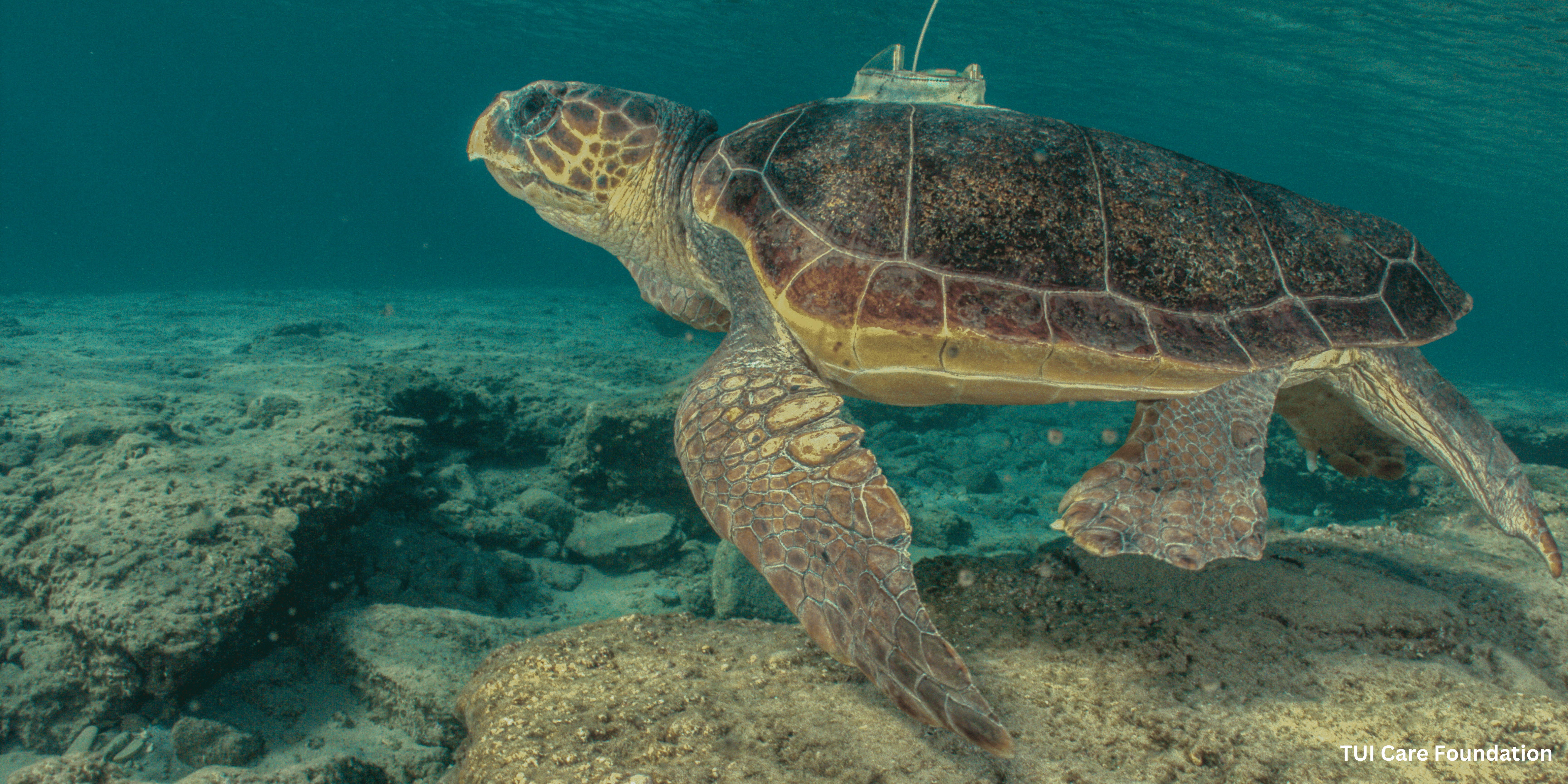
Satellite transmitters are small, waterproof devices that are usually attached to the turtle's shell with a special adhesive. Each time the turtle rises to the surface to breathe, a "switch" activates the long-lasting battery and the transmitter sends a signal to one of Argos satellites orbiting the earth. This signal is then transmitted to ARCHELON's computers, indicating the turtle's location and, in a short time, a map is created showing the turtle's entire path. In 2-3 years, when the battery has been exhausted, the transmitter detaches from the turtle's shell.
The first satellite transmitters were placed in 2002 on turtles in the Amvrakikos Gulf. Since then, ARCHELON and its partners have placed 150 satellite and GSM tags on sea turtles in various areas of Greece. These transmitters ranged from simple ones to advanced models that, in addition to position, record depth and temperature. The transmitters have been placed on adult and juvenile, male and female Loggerhead turtles (Caretta caretta), except for one transmitter that wasfitted on a green turtle (Chelonia mydas) in Syria. “We prepared a small Feature on ARCHELON's satellite monitoring of 150 sea turtles through the years, to highlight our results” says Aliki Panagopoulou (PhD), Head of Research Activities at ARCHELON.
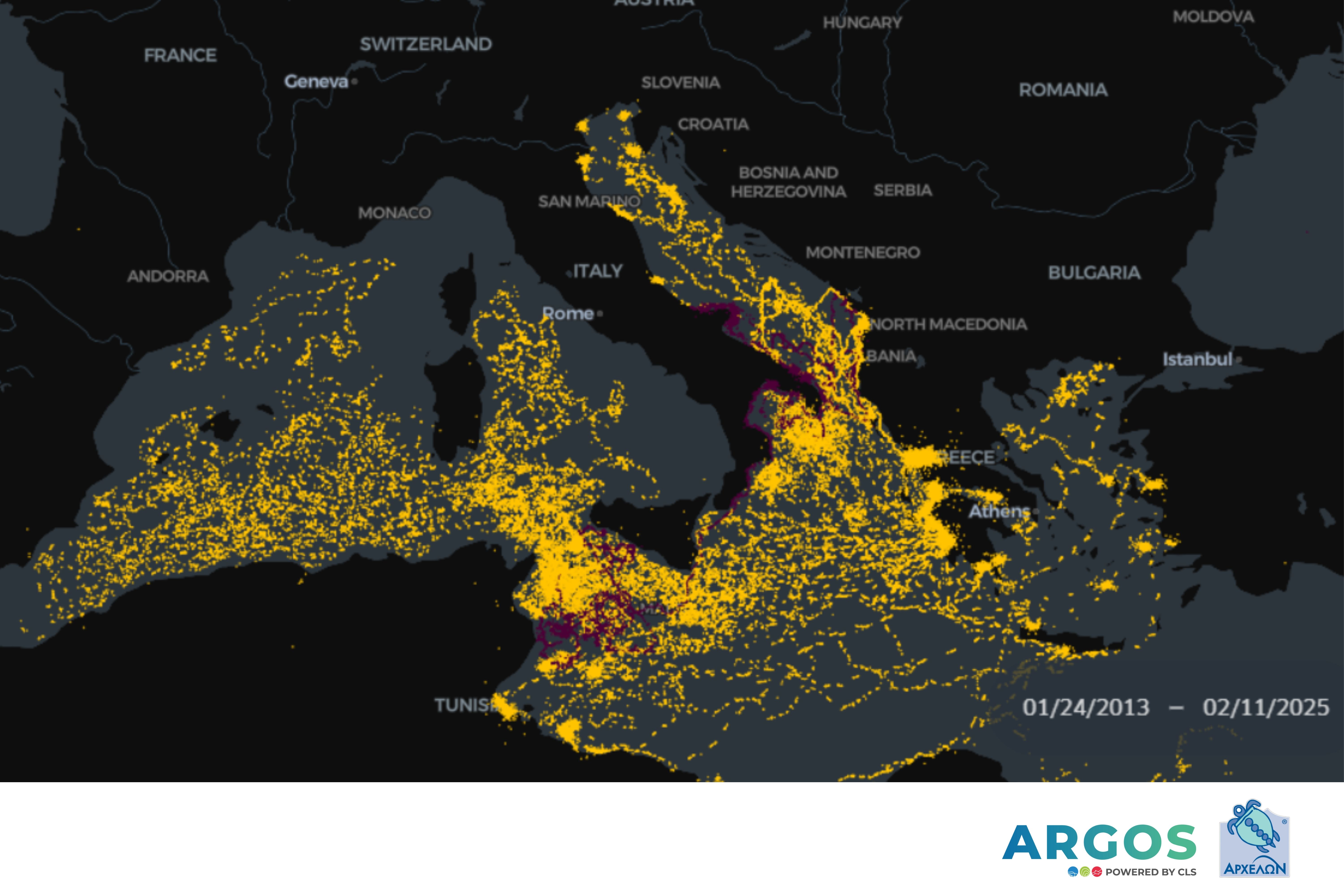
The results so far have led to important conclusions regarding the migrations and ecology of the Loggerhead in Greece, with the ultimate goal of its more substantial protection at a Mediterranean level. Some of these conclusions are:
- Important feeding areas for turtles that lay eggs in Zakynthos and Kyparissia Bay are the Adriatic Sea and the Gulf of Gabès in Tunisia.
- The turtles of Rethymno, between successive nestings, can move up to 150 km. from the initial nesting beach, and possibly lay eggs on another beach.
- The turtles of Rethymno, after their breeding season, migrate to the Gulf of Gabès (Tunisia) and the Aegean Sea, but not to the Adriatic (like the turtles of Zakynthos and Kyparissia).
- The turtle "Regina" in 2013 made the largest migration ever recorded in Greece, from Messolonghi to Ibiza, Spain!
- Turtles do not necessarily "settle" in a specific feeding area, as we thought, but can also live in the open sea, feeding on pelagic organisms!
- The average nesting frequency (i.e. the number of nests that each turtle makes during the nesting season) is higher than we assumed!
At the 9th Our Ocean Conference in April 2024, Greece committed to installing 200 new satellite transmitters to monitor sea turtles. In the summer of 2024, as part of the LIFE MareNatura project, ARCHELON installed satellite tags on 20 turtles in various nesting areas. Also, in November 2024, with the support of the TUI Care Foundation, we installed a satellite transmitter on a turtle that was released after treatment at the ARCHELON Rescue Centre.
Learn more in the special Feature!
Follow the 2024 turtle journeys live on our website!
Meeting of organizations, authorities and businessmen in Rethymno: Crete is preparing for the arrival of the turtles!
Become a Guardian of the Night: Volunteer with ARCHELON
RECENT NEWS
- OUR NEWS14/10/2026
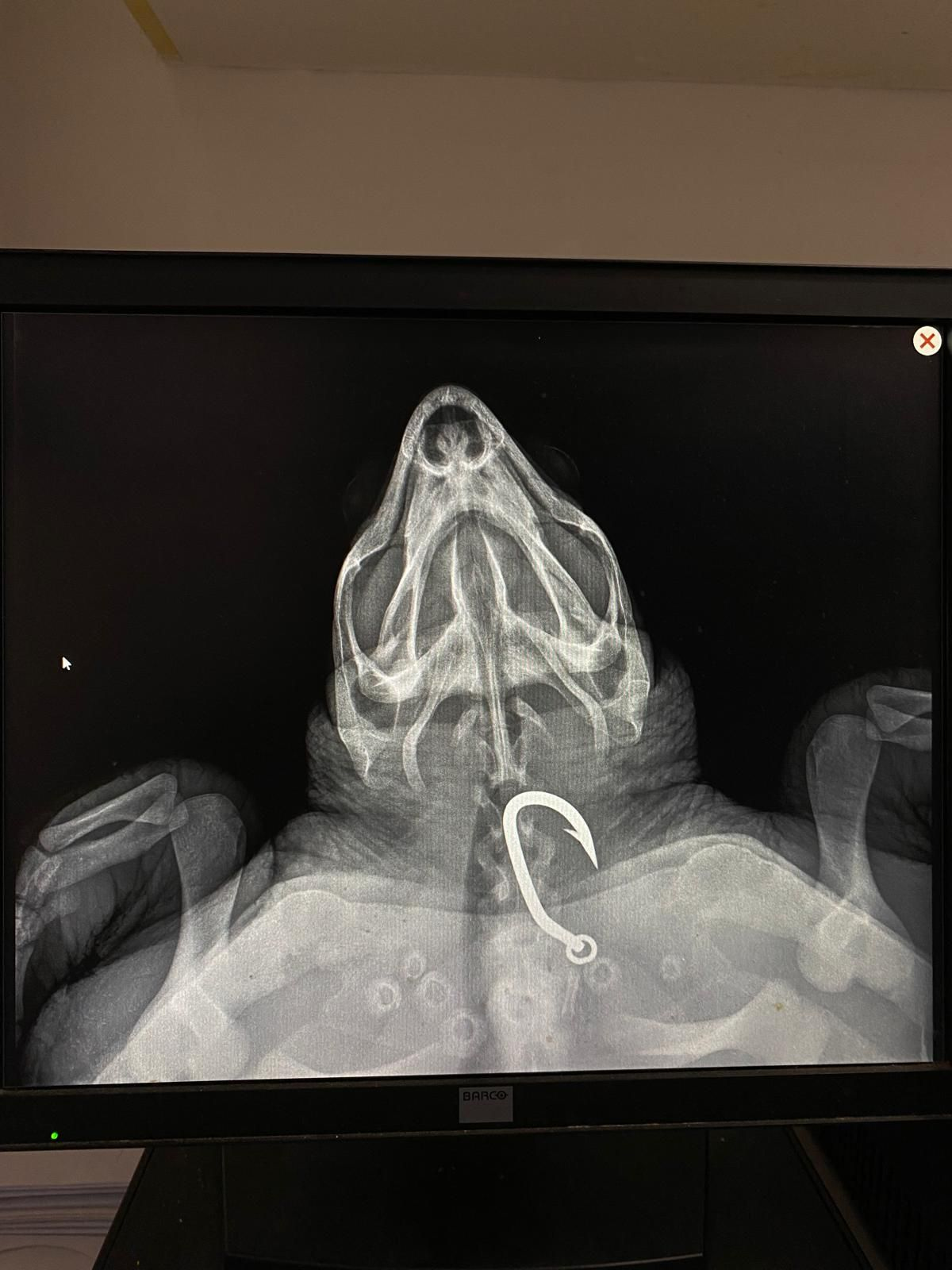
The examinations behind every diagnosis: A vital step in sea turtle rehabilitation
This is where diagnostic examinations play a crucial role. X-rays are an invaluable tool for our rehabilitation team, both upon admission and throughout the recovery process, helping us determine the appropriate treatment and monitor each turtle’s progress.
- OUR NEWS09/10/2026
“Guardians of our ancient sea”: The 8th Mediterranean Conference on Marine Turtles takes place in Greece
The conference is expected to host 240 delegates from 20 Mediterranean countries, including leading researchers and scientists, as well as representatives from protected area management bodies and environmental organizations.
- OUR NEWS06/10/2026
A Wildlife Weekend at the Museum
On the weekend of October 3rd and 4th, ARCHELON participated in the "Wild Weekend", a two-day celebration dedicated to wildlife at the Goulandris Natural History Museum.
- OUR NEWS01/10/2026
October for sea turtles: Help us care for our sea turtle patients this winter
This October, we are launching a fundraising campaign with one clear goal: to raise €5,000 to support the care of our sea turtle patients through the end of 2026.
- OUR NEWS25/09/2026
Together for Crete’s nesting beaches: "Turtle-Friendly Hotel" award ceremonies in Chania and Rethymno
ARCHELON hosted the award ceremonies for the new Turtle-Friendly Hotel certification, as part of the TUI Turtle Aid Greece program in Crete.
- OUR NEWS23/09/2026
We bade farewell to Omiros, the blind sea turtle that traveled from Greece to Cornwall
In September 2026 Omiros, a male Loggerhead sea turtle with a remarkable story, passed away. He had spent the last 16 years of his life at the Blue Reef Aquarium in Cornwall, having traveled there from Greece.
- OUR NEWS10/09/2026
Sea turtles kept in a restaurant tank in Chania: True love for nature begins with respect.
We all feel a sense of excitement when we encounter a wild animal up close. It is only natural to want to connect with nature, observe it and understand it better.
- OUR NEWS09/09/2026
Schools are back at ARCHELON! A new year full of learning and action
The new school year is beginning, and with it, the voices, questions, and excitement of thousands of students return to ARCHELON’s Sea Turtle Rescue Centre.
- OUR NEWS06/09/2026
Sea Turtle Hatchlings Captivated All Ages in Corfu
- OUR NEWS01/09/2026
Taking time off work to volunteer for the sea turtles in Greece: Amy’s month with ARCHELON in southern Peloponnese
When Amy Carey was 10 years old, she came face to face with a sea turtle while on holiday in Greece. Decades later, at 47, she decided it was time to turn that childhood memory into reality.
- OUR NEWS13/08/2026
Hatchlings need help in September and October: Special volunteer offer for 2 weeks!
In order to protect the nests and the last hatchlings of this year, we need the help of more volunteers!
- OUR NEWS10/08/2026
One beach party canceled, 66 nests saved in Chania!
A significant victory for the protection of sea turtles in Chania, thanks to the direct cooperation of ARCHELON and NECCA.
- OUR NEWS07/08/2026
Sea turtles of the Saronic Gulf: Why feeding them is not an act of love
The Municipality of Saronikos and ARCHELON are campaigning for the safe and proper coexistence of bathers and wildlife.
- OUR NEWS05/08/2026
Greek fishermen release rare Leatherback Turtle in the North Aegean!
In mid-July, we received a video of an impressive sea turtle that had been caught in the nets of a fishing boat.
- OUR NEWS30/07/2026
Join our Sea Turtle Nest Excavations in Peloponnese and Crete
ARCHELON invites you to a unique experience of environmental education and scientific observation!