


Advancing sea turtle photo-ID research with artificial intelligence
For long time now, sea turtle researchers have been exploiting the unique scale pattern of sea turtle individuals to identify them from images and study several aspects of their ecology and biology. These patterns are unique to every individual and stay stable in time (like human fingerprints!). The process, called sea turtle photo-identification (photo-ID), is nowadays used in projects all over the world and examples of studies facilitated by it include in-water behaviour studies, occurrence of injuries, progress of diseases, population monitoring and measuring ecotouristic impact on individual turtles.
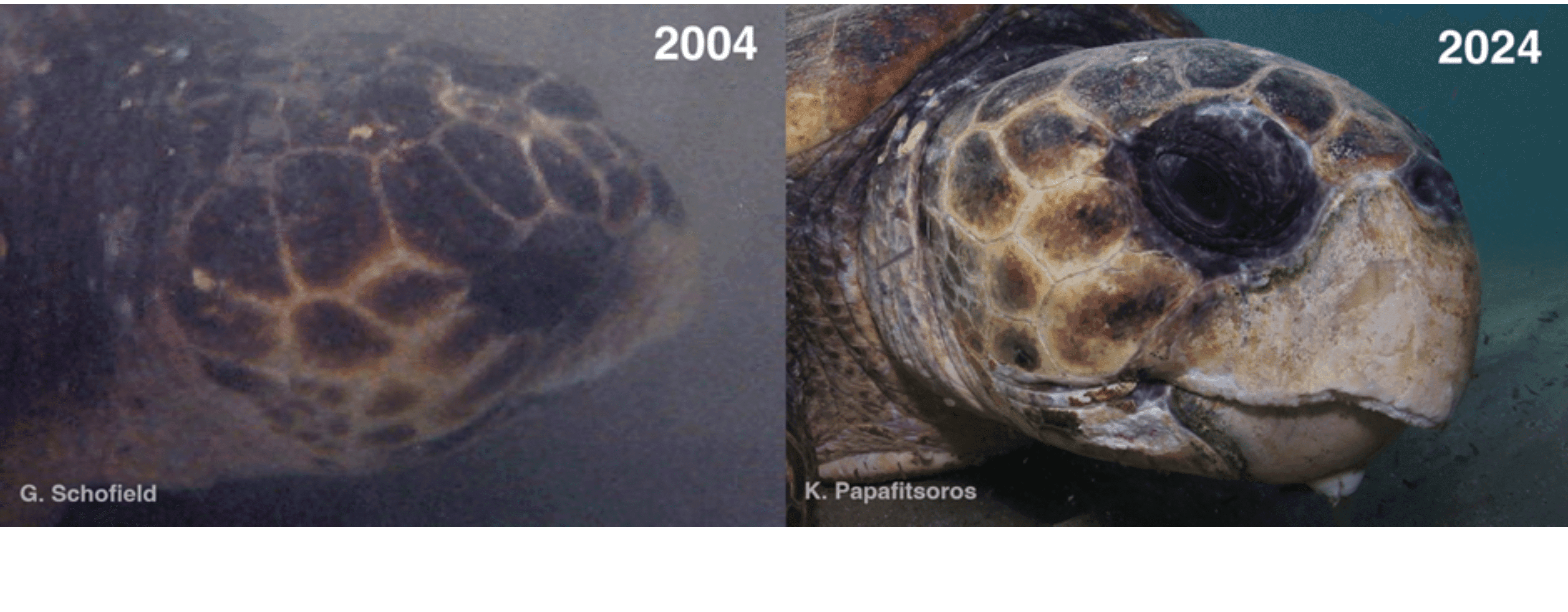
The way sea turtle photo-ID is traditionally done is via comparing the facial geometric scale patterns of the same sides of turtles’ heads. This is because these are different from side to side on any individual sea turtle. Therefore, any new image showing the profile of an individual (left or right) is only compared to images of previously identified individuals showing the same side (left or right).
A recent study used artificial intelligence to push the boundaries of the method. The study was led by Kostas Papafitsoros, long term member and researcher of ARCHELON and Lukáš Adam, a researcher from Czech Republic who had also been volunteer in ARCHELON Zakynthos project. ARCHELON’s scientific committee member, ALan F. Rees, also participated in the study.
One of the main findings was that the similarity of left and right profiles of the same turtle is higher than the similarities of profiles of different turtles.
Try to verify that yourself! Can you match the left side of "Viktoria" with her right side?
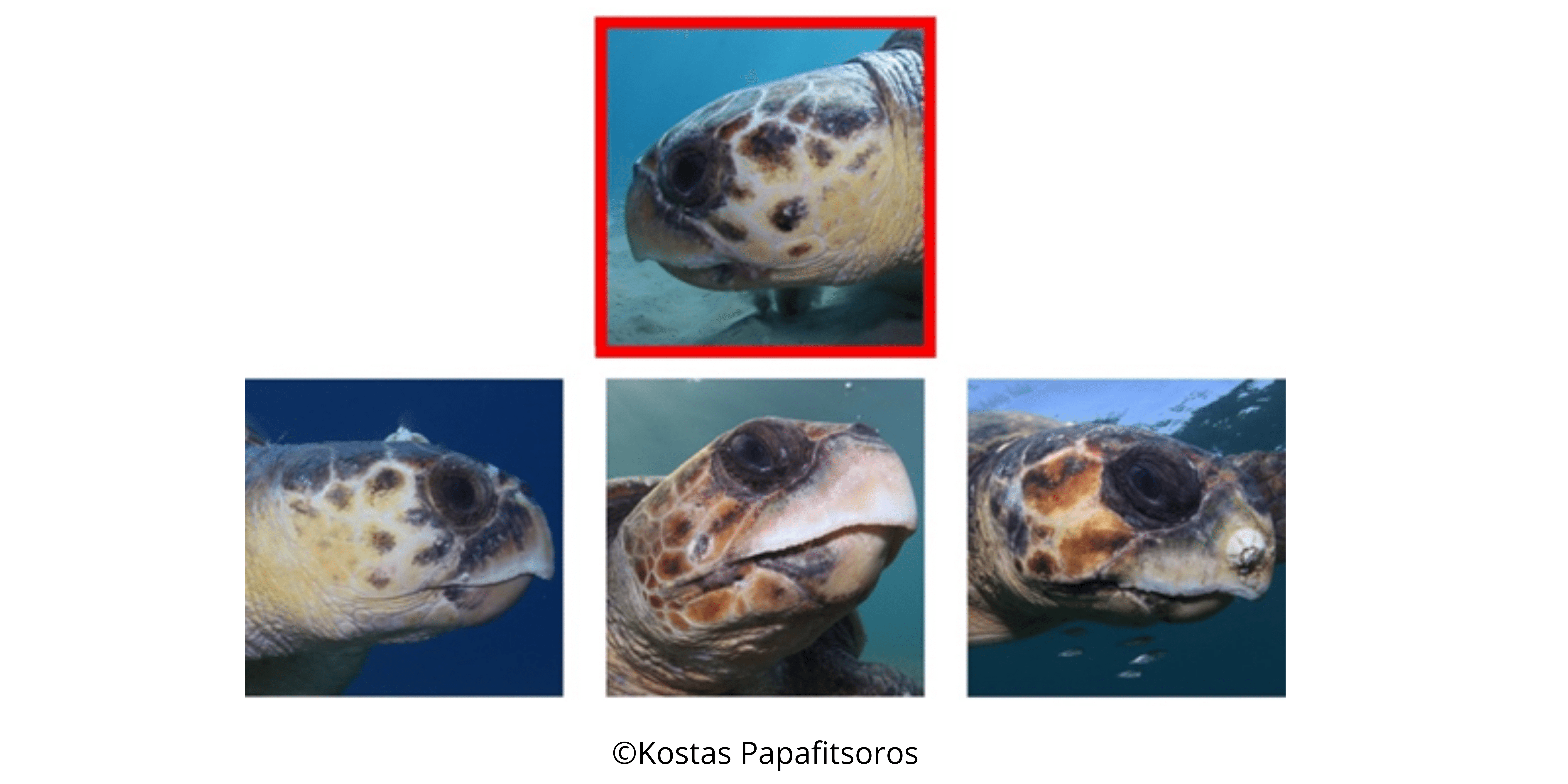
The same study showed that artificial intelligence algorithms, including one previously developed by the team, can detect this left-right similarity in three sea turtle species. The algorithms can match left and right profiles of the same individual sea turtles which have otherwise no spatial overlap. This results in higher photo-ID matching accuracies and in the future, it might be sufficient to photograph only one side of a turtle’s face when collecting photo-ID data, allowing for more flexible data collection protocols.
Sea turtle nesting has begun in Greece: learn what to look out for!
Kyparissia Bay: Balancing Nature and Tourism
RECENT NEWS
- OUR NEWS10/09/2026
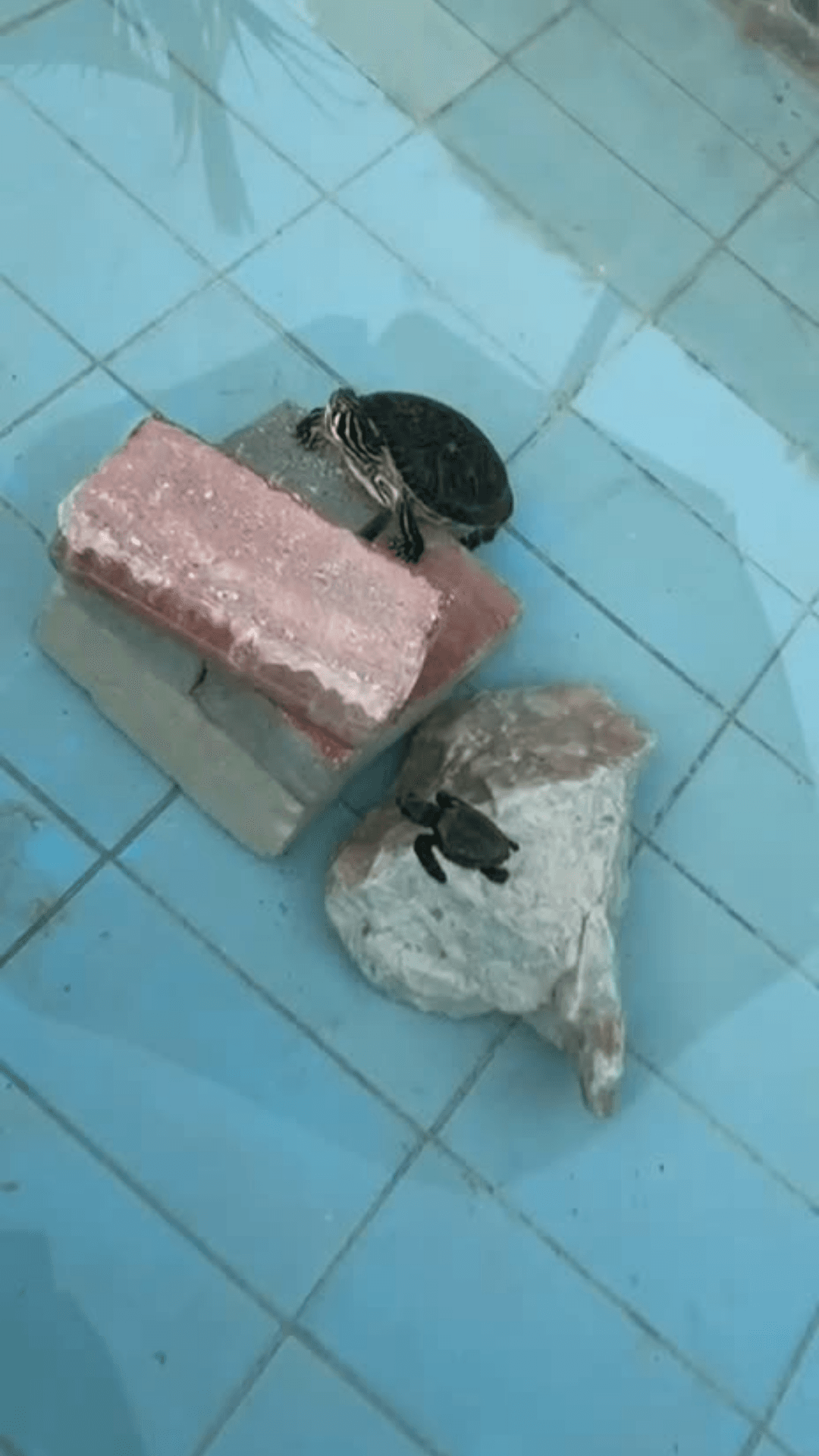
Sea turtles kept in a restaurant tank in Chania: True love for nature begins with respect.
We all feel a sense of excitement when we encounter a wild animal up close. It is only natural to want to connect with nature, observe it and understand it better.
- OUR NEWS09/09/2026
Schools are back at ARCHELON! A new year full of learning and action
The new school year is beginning, and with it, the voices, questions, and excitement of thousands of students return to ARCHELON’s Sea Turtle Rescue Centre.
- OUR NEWS06/09/2026
Sea Turtle Hatchlings Captivated All Ages in Corfu
- OUR NEWS01/09/2026
Taking time off work to volunteer for the sea turtles in Greece: Amy’s month with ARCHELON in southern Peloponnese
When Amy Carey was 10 years old, she came face to face with a sea turtle while on holiday in Greece. Decades later, at 47, she decided it was time to turn that childhood memory into reality.
- OUR NEWS13/08/2026
Hatchlings need help in September and October: Special volunteer offer for 2 weeks!
In order to protect the nests and the last hatchlings of this year, we need the help of more volunteers!
- OUR NEWS10/08/2026
One beach party canceled, 66 nests saved in Chania!
A significant victory for the protection of sea turtles in Chania, thanks to the direct cooperation of ARCHELON and NECCA.
- OUR NEWS07/08/2026
Sea turtles of the Saronic Gulf: Why feeding them is not an act of love
The Municipality of Saronikos and ARCHELON are campaigning for the safe and proper coexistence of bathers and wildlife.
- OUR NEWS05/08/2026
Greek fishermen release rare Leatherback Turtle in the North Aegean!
In mid-July, we received a video of an impressive sea turtle that had been caught in the nets of a fishing boat.
- OUR NEWS30/07/2026
Join our Sea Turtle Nest Excavations in Peloponnese and Crete
ARCHELON invites you to a unique experience of environmental education and scientific observation!
- OUR NEWS20/07/2026
43 Years of Tagging Sea Turtles in Greece Reveal Their Journeys in the Mediterranean
A new scientific publication highlights the important marine areas turtles use in the Mediterranean, through ARCHELON’s tagging program in Zakynthos, Kyparissia Bay and Rethymno.
- OUR NEWS17/07/2026
The first hatchlings of 2026 in Zakynthos!
The first nest hatched on Dafni beach in Laganas Bay in Zakynthos. Our team discovered the tiny tracks in the early hours of Tuesday, July 14th.
- OUR NEWS15/07/2026
A rare giant of the Greek seas: What our new study reveals about the Leatherback turtle
A new scientific publication brings together for the first time all available records of the Leatherback sea turtle (Dermochelys coriacea) in Greek waters.
- OUR NEWS10/07/2026
Raising awareness for the sea turtles in Corfu
To mark the launch of the project, ARCHELON carried out a series of outreach activities across Corfu, bringing local communities and visitors closer to sea turtle conservation.
- OUR NEWS08/07/2026
Protecting loggerhead sea turtles contributes to maintaining the balance of marine ecosystems.
Sea turtles play a vital role in maintaining healthy marine ecosystems. As part of marine food webs, they contribute to the balance and functioning of coastal and marine habitats.
- OUR NEWS05/07/2026
Is the Zakynthos National Marine Park Truly Protected?
Two cases of environmental law violations in Zakynthos that went unpunished.