


Presentation of the 2018 results in a few words
On February 14th, ARCHELON members and staff gathered in the friendly venue of Patakis bookstore in Athens, for the presentation of ARCHELON’s results in the 2018 projects. Friends from other environmental organizations and collaborators also joined us, as well as current volunteers of our rescue network and environmental education program.
The presentation started with data and information collected by 510 volunteers during the 2018 summer projects. We learned that about 6000 loggerhead Caretta caretta nests were recorded on the 134 km of beach surveyed by ARCHELON’s teams on Zakynthos, Crete and the Peloponnese. Significant pressures persisted in the project areas, despite an improvement in removing beach furniture at night. Vehicles moving on nesting beaches remains a problem and the presence of artificial lighting on beaches is still a major threat.
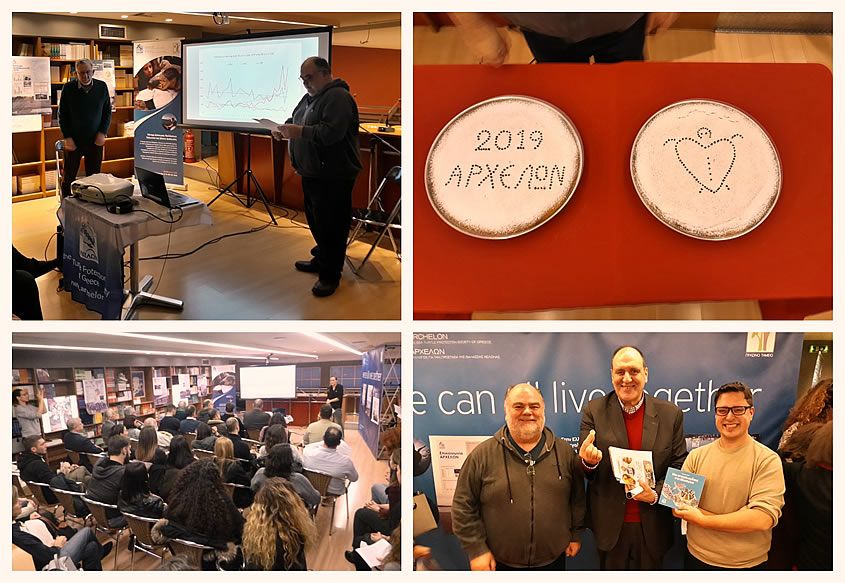
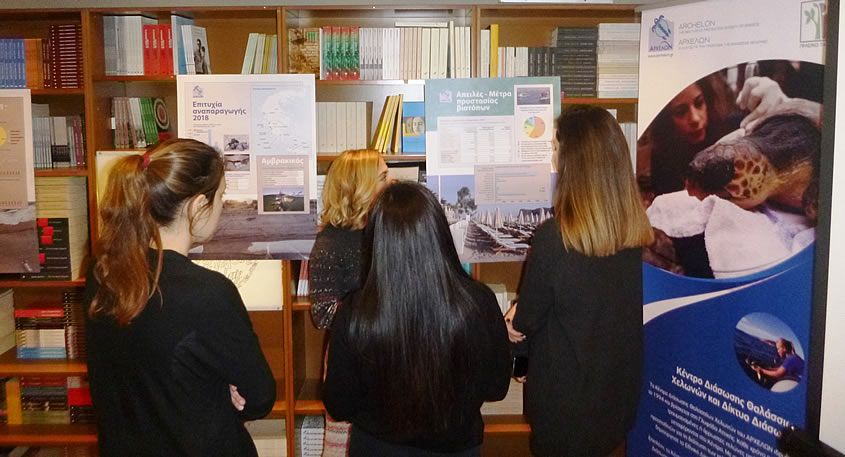
The education team at the Rescue Center near Athens, organized 329 presentations during the school year 2017-2018. Thirty (30) rescued turtles have returned to sea, and 26 remain under treatment at the Rescue Center. In total, 114 volunteers supported the rescue network, turtle treatment and environmental education programs at the Rescue Center. Special reference was made of 5 people who are residents of Attica and were able to spend valuable time for the injured turtles in addition to the part-time volunteer duties they undertook.
The discussion between Dimitris Margaritoulis and Thomas Arapis on the significance of the high number of Caretta caretta nests during 2018 in the Mediterranean sparked the interest of those attending. We were informed that the fluctuations observed in the numbers of loggerhead nests each year are attributed to environmental factors that affect the wintering and foraging marine areas. Combined data from other countries show that almost 50% of the Caretta caretta nests in the Mediterranean each year are made in Greece, but these turtles winter in Tunisia or the north Adriatic. The comparison of the number of nests from 1983 to date has shown that 2018 is not a record year for Zakynthos or Kyparissiakos gulf and unfortunately does not show any change in the decreasing trend of number of nests on Crete.
After the interesting and emotional snapshots that were presented, we were informed that a fairy tale titled "A Love Story in the Mediterranean" was published and released for ARCHELON’s 35th anniversary. In the end, the New Years Cake was cut and the lucky coin was found by Mr. Dimitris Kalaitzidakis, Chief Operating Officer of GRECOTEL, a friend of ARCHELON for many years. Wishing a great year to everyone!
For more information on the results of 2018 visit:
Α love story in the Mediterranean Sea
Four tags still transmitting- where are they now? Following the travels of loggerhead sea turtles from Kyparissia
RECENT NEWS
- OUR NEWS25/09/2026
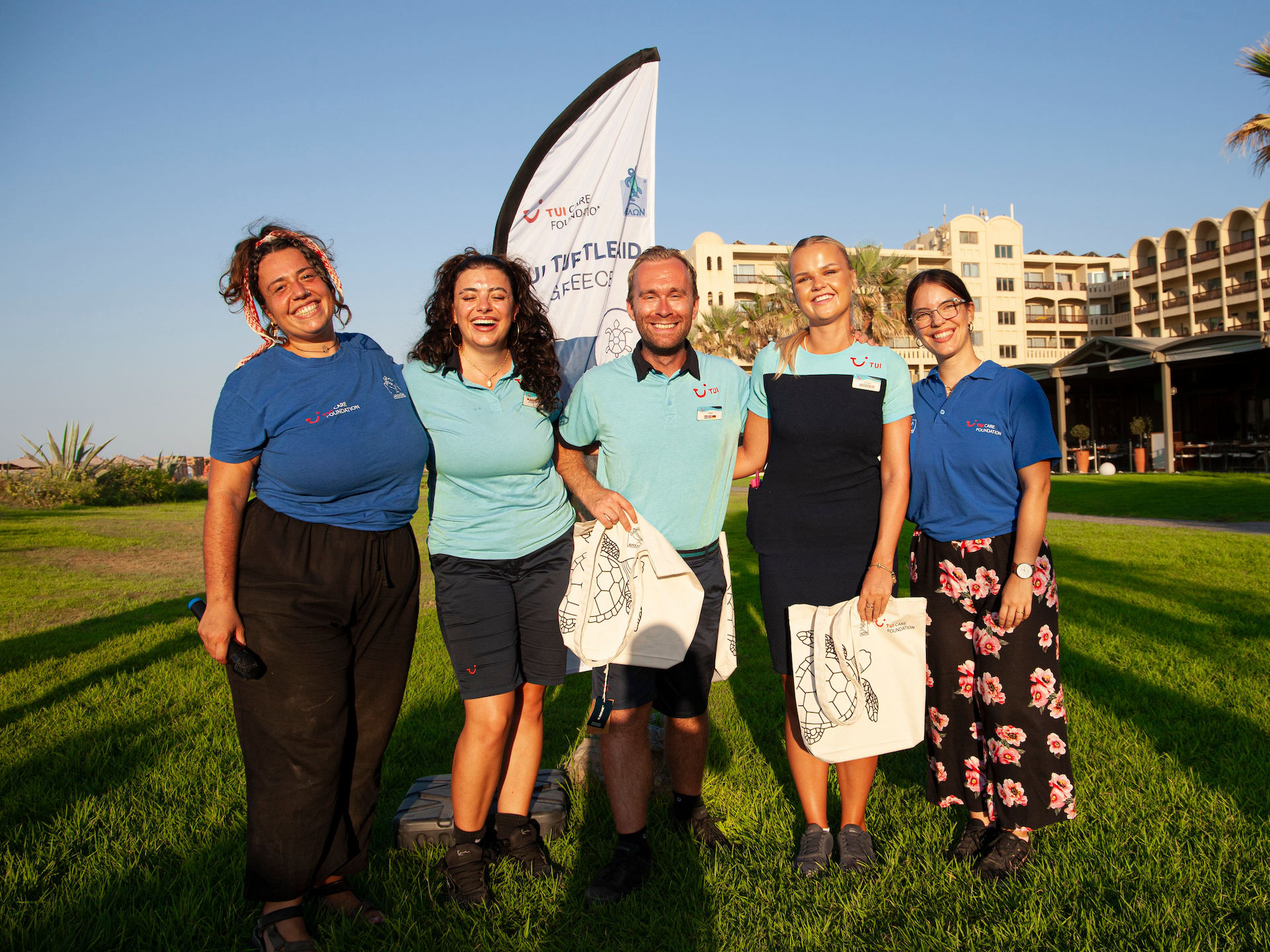
Together for Crete’s nesting beaches: "Turtle-Friendly Hotel" award ceremonies in Chania and Rethymno
ARCHELON hosted the award ceremonies for the new Turtle-Friendly Hotel certification, as part of the TUI Turtle Aid Greece program in Crete.
- OUR NEWS23/09/2026
We bade farewell to Omiros, the blind sea turtle that traveled from Greece to Cornwall
In September 2026 Omiros, a male Loggerhead sea turtle with a remarkable story, passed away. He had spent the last 16 years of his life at the Blue Reef Aquarium in Cornwall, having traveled there from Greece.
- OUR NEWS10/09/2026
Sea turtles kept in a restaurant tank in Chania: True love for nature begins with respect.
We all feel a sense of excitement when we encounter a wild animal up close. It is only natural to want to connect with nature, observe it and understand it better.
- OUR NEWS09/09/2026
Schools are back at ARCHELON! A new year full of learning and action
The new school year is beginning, and with it, the voices, questions, and excitement of thousands of students return to ARCHELON’s Sea Turtle Rescue Centre.
- OUR NEWS06/09/2026
Sea Turtle Hatchlings Captivated All Ages in Corfu
- OUR NEWS01/09/2026
Taking time off work to volunteer for the sea turtles in Greece: Amy’s month with ARCHELON in southern Peloponnese
When Amy Carey was 10 years old, she came face to face with a sea turtle while on holiday in Greece. Decades later, at 47, she decided it was time to turn that childhood memory into reality.
- OUR NEWS13/08/2026
Hatchlings need help in September and October: Special volunteer offer for 2 weeks!
In order to protect the nests and the last hatchlings of this year, we need the help of more volunteers!
- OUR NEWS10/08/2026
One beach party canceled, 66 nests saved in Chania!
A significant victory for the protection of sea turtles in Chania, thanks to the direct cooperation of ARCHELON and NECCA.
- OUR NEWS07/08/2026
Sea turtles of the Saronic Gulf: Why feeding them is not an act of love
The Municipality of Saronikos and ARCHELON are campaigning for the safe and proper coexistence of bathers and wildlife.
- OUR NEWS05/08/2026
Greek fishermen release rare Leatherback Turtle in the North Aegean!
In mid-July, we received a video of an impressive sea turtle that had been caught in the nets of a fishing boat.
- OUR NEWS30/07/2026
Join our Sea Turtle Nest Excavations in Peloponnese and Crete
ARCHELON invites you to a unique experience of environmental education and scientific observation!
- OUR NEWS20/07/2026
43 Years of Tagging Sea Turtles in Greece Reveal Their Journeys in the Mediterranean
A new scientific publication highlights the important marine areas turtles use in the Mediterranean, through ARCHELON’s tagging program in Zakynthos, Kyparissia Bay and Rethymno.
- OUR NEWS17/07/2026
The first hatchlings of 2026 in Zakynthos!
The first nest hatched on Dafni beach in Laganas Bay in Zakynthos. Our team discovered the tiny tracks in the early hours of Tuesday, July 14th.
- OUR NEWS15/07/2026
A rare giant of the Greek seas: What our new study reveals about the Leatherback turtle
A new scientific publication brings together for the first time all available records of the Leatherback sea turtle (Dermochelys coriacea) in Greek waters.
- OUR NEWS10/07/2026
Raising awareness for the sea turtles in Corfu
To mark the launch of the project, ARCHELON carried out a series of outreach activities across Corfu, bringing local communities and visitors closer to sea turtle conservation.